Croissant Pronunciation and Eating
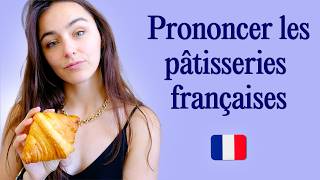
The video could not be loaded here. Watch on YouTube and follow the transcript below.
Salut, salut, salut !
Hi, hi, hi!
Transcript
Salut, salut, salut !
Hi, hi, hi!
Bienvenue dans un nouvel épisode de French Mornings,
Welcome to another episode of French Mornings,
et bienvenue dans ma cuisine.
and welcome to my kitchen.
Si vous apprenez le français, vous êtes au bon endroit.
If you're learning French, you've come to the right place.
Je m'appelle Elisa et sur cette chaîne, je vous aide à améliorer votre français
My name is Elisa and on this channel I help you to improve your French,
et à parler de façon plus naturelle.
and to speak more naturally.
Aujourd'hui, on va allier l'utile à l'agréable.
Today, we're combining business with pleasure.
C'est ce qu'on dit en français quand on veut faire quelque chose d'utile, mais
That's what we say in French when we want to do something useful, but
d'amusant et d'agréable en même temps.
fun and enjoyable at the same time.
Donc, on va apprendre quelques de règles de prononciation
So, we're going to learn a few pronunciation rules
en mangeant des pâtisseries.
while eating pastries.
Alors, installez-vous bien, prenez un petit café, un petit croissant,
So get comfortable, grab a cup of coffee and a croissant,
si vous en avez, et c'est parti.
if you have one, and let's start.
Ce matin, je suis allée acheter quelques pâtisseries et viennoiseries.
This morning I went to buy some pastries and viennoiseries.
C'est pas exactement la même chose.
They're not exactly the same thing.
Les pâtisseries, c'est tout ce qui est très froid, à base de crème, etc.
Pastries are all that is cold, with a cream base, etc.
Les viennoiseries, c'est plutôt tout ce qui est
Viennoiseries are your
croissant, pain au chocolat, chaussons aux pommes, brioche, etc.
croissants, pains au chocolat, apple turnovers, brioches, etc.
J'ai trouvé quelques pâtisseries.
I've got some pastries and
Je vais les manger toutes seules aujourd'hui et en même temps,
I'm going to eat them all by myself today and at the same time,
je vais vous expliquer quelques règles de prononciation et comment bien
I'm going to explain a few pronunciation rules and how to correctly
prononcer le nom de ces pâtisseries.
pronounce the names of these pastries.
Si vous avez envie d'améliorer votre prononciation, d'ailleurs,
If you want to improve your pronunciation, by the way,
vous pouvez cliquer sur le lien en description,
you can click on the link in the description,
vous trouverez mon guide de prononciation qui contient toutes les règles
you'll find my pronunciation guide containing all the rules
dont je vais parler dans cette vidéo.
that I'm going to talk about in this video.
Un peu chaud, ce café !
This coffee's a bit hot!
On va commencer avec les tartes.
We'll start with the tarts.
J'ai pris deux tartes différentes.
I got two different tarts.
On va commencer avec la tarte à la framboise.
Let's start with the raspberry tart.
Je vais vous montrer à quoi elle ressemble.
I'll show you what it looks like.
D'habitude, les tartes aux framboises, il y a un petit peu plus de framboises
Raspberry tarts usually have a little more fresh raspberries,
fraîches, mais c'est pas grave, je suis sûre qu'elle est
but it doesn't matter, I'm sure that this one
très bonne aussi, celle-ci.
is also very good.
Comment est-ce qu'on prononce bien ce mot ?
How do you pronounce this word?
Une tarte aux framboises.
Une tarte aux framboises. (A raspberry tart) Une tarte aux framboises.
Ce qui est difficile ici, c'est le mot tarte.
What's difficult here is the word "tarte".
Le R que vous entendez dans tarte, il est un peu plus léger, peut-être, que
The R you hear in tart is a little lighter, perhaps, than
le R que vous avez l'habitude d'entendre.
the R you're used to hearing.
Pourquoi ? Parce qu'il est à la fin de la syllabe.
Why? Because it's at the end of the syllable.
Tar-, tar-
Tar-, tar-
Ce que vous allez faire pour prononcer ce R qui est plus léger, c'est partir du son :
To pronounce this lighter R, start with the sound :
H, H
H, H
et essayer de le durcir un peu.
and try to harden it a little.
H
H
Presque comme le J espagnol.
Almost like the Spanish J.
Et encore plus fort: R,
And now even stronger: R,
tarte, tarte, tarte.
"tarte, tarte, tarte".
Donc, on a une tarte aux framboises.
So we have a raspberry tart.
Attention, dans le "aux", on a un mot au pluriel, mais on ne prononce pas le X.
Note that "aux" is a plural word, but the X is not pronounced.
Rappelez-vous, A et U en français, ça fait le son O.
Remember, A and U in French make the sound O.
Et ensuite, on a le mot framboise.
And then there's the word "framboise" (raspberry).
Pas facile, encore une fois, ici, on a le F et le R qui se suivent.
Once again, it's not easy. Here, the F and the R follow each other.
Ça fait donc le son fr, fr, fr.
So it makes a fr, fr, fr sound.
Et ensuite, on a le EM avec A et M.
Then we have the EM with A and M.
A et M, ça fait le son [ɑ̃].
A and M make the sound [ɑ̃].
Pour prononcer le son [ɑ̃], on va placer la langue au fond
To pronounce the sound [ɑ̃], we place the tongue at the back
de la bouche, et on va faire un son bien nasal.
of the mouth, and we make a very nasal sound.
On part du son A, A
We start with sound A, A,
je place ma langue en bas, [ɑ̃], [ɑ̃].
I put my tongue at the bottom, [ɑ̃], [ɑ̃].
Donc, on a "fram-", on continue avec "-boise", framboise.
So we have "fram-", we continue with "-boise", "framboise".
En français, le O et le I, quand ils
In French, the O and the I, when they
se suivent, ça fait le son wa, wa.
follow each other, make the sound wa, wa.
On a donc: framboise.
So we have: "framboise".
À la fin, c'est un son Z. Pourquoi ?
At the end, it's a Z sound. Why is that?
Parce que le S est entre deux voyelles, le I et le E.
Because the S is between two vowels, the I and the E.
Donc, on a framboise.
So we have "framboise".
Et attention, le S du pluriel est muet, mais ça, je suis sûre que vous le savez.
And be careful, the plural S is silent, but I'm sure you know that.
Alors, cette tarte aux framboises, on va la goûter.
So, let's try this raspberry tart.
C'est très bon.
It's really good.
J'aime bien le fait que la pâte soit pas trop croustillante.
I like the fact that the pastry is not too crispy.
C'est presque comme un biscuit un peu moelleux.
It's almost like a slightly chewy biscuit.
J'aime beaucoup. Cette partie-là, c'est le biscuit.
I really like it. This part is the biscuit.
Au milieu, on a de la crème
In the middle, we have cream
et ensuite, on a une compote de framboises, je pense.
and then we have a raspberry compote, I think.
C'est très bon.
It's really good.
On continue avec la deuxième pâtisserie qui est la tarte au citron meringuée.
Let's continue with the second pastry, the lemon meringue pie.
Je vais vous la montrer, c'est celle-ci.
I'll show you, it's this one.
Ce qu'il y a sur le dessus qu'on voit, c'est la meringue.
What you see on top is the meringue.
On reprend ! La tarte, vous savez le dire maintenant.
Back to work! Now you know how to say "tarte".
Donc c'est une tarte au citron.
So it's a lemon tart.
A et U, encore une fois, ça fait le son O.
A and U, once again, make the O sound.
Citron. Dans citron, à la fin, on a le son [ɔ̃].
"Citron" (lemon). In "citron", at the end, we have the sound [ɔ̃].
[ɔ̃].
[ɔ̃].
C'est encore une fois un son nasal.
Once again, it's a nasal sound.
O et N ensemble, ça fait le son [ɔ̃].
O and N together make the sound [ɔ̃].
Pour prononcer le son [ɔ̃], on va faire un rond avec la bouche,
To pronounce the sound [ɔ̃], make a circle with your mouth,
comme si on voulait prononcer le son O. O.
as if you wanted to pronounce the sound O. O.
Mais on va encore une fois mettre la langue au fond de la bouche
But again we're going to place the tongue at the back of the mouth,
et faire un son nasal.
and make a nasal sound.
Ça va donner O, ɔ̃, ɔ̃, du citron.
This will give O, ɔ̃, ɔ̃, "du citron".
Dans la tarte au citron meringuée, on a aussi le mot meringuée.
In the word, "tarte au citron meringuée", we also have the word, "meringuée".
Les lettres M et E, elles vont faire le son me, me.
The letters M and E make the sound me, me.
On n'a pas d'accent sur le E, donc on va avoir un son e
We don't have an accent on the E, so we'll have an e sound.
et non pas un son é ou è.
and not an é or è sound.
Me, rin, in.
Me, rin, in.
Cette fois-ci, on a le son [ɛ̃].
This time we have the sound [ɛ̃].
Pour prononcer le son [ɛ̃], on va faire comme si on voulait prononcer le son I,
To pronounce the sound [ɛ̃], we're going to do as though we were trying to pronounce the sound I,
donc, on va élargir la bouche comme pour sourire, I.
so we're going to widen our mouths as if to smile, I.
Et on fait encore une fois la même chose.
And we do the same thing all over again.
On met la langue au fond de la bouche, et on fait un son nasal qui vient du nez.
You put your tongue at the back of your mouth, and make a nasal sound, which comes from the nose.
ɛ̃, i, ɛ̃, i, ɛ̃,
ɛ̃, i, ɛ̃, i, ɛ̃,
me, rin, guée, guée.
me, rin, guée, guée.
En français, quand on a la lettre G
In French, when you have the letter G
suivie d'un U, on a le son g, g.
followed by a U, you get the sound g, g.
Et donc, on va avoir me, rin, guée.
So we have: me-rin-guée.
La tarte au citron me-rin-guée.
"La tarte au citron me-rein-guée".
Et on va la goûter. Je vais la goûter.
We're going to taste it. I'm going to taste it.
Je sais pas si vous en avez chez vous, peut-être.
I don't know if you have one at home, maybe.
Je vais goûter d'abord juste la meringue,
I'm going to taste just the meringue first,
elle est très, très bonne.
it's very, very good.
Parfois, les meringues, c'est un peu trop sucré pour moi, mais là, c'est très bien.
Sometimes meringues are a bit too sweet for me, but this one is really good.
Ce qui m'étonne, c'est que cette tarte, on dirait que la crème au citron est
What surprises me is that in this tart, the lemon cream seems to be
cuite, qu'elle a été passée au four.
baked in the oven.
C'est pas le cas d'habitude dans une tarte au citron plus classique.
This is not usually the case in a more classic lemon tart.
On a de la crème qui est pas cuite en fait,
We have cream that isn't actually cooked,
qui est juste refroidie au frigo.
which has just cooled in the fridge.
C'est super bon aussi.
It's really good too.
Elle est vraiment bonne, mais ça manque un peu de citron pour moi.
It's really good, but it's lacking a bit of lemon for me.
Moi, je préfère en tout cas, quand la tarte au citron est un peu plus acide.
In any case, I prefer it when the lemon tart is a little more acidic.
On va continuer maintenant avec les viennoiseries,
We'll continue now with the viennoiseries,
que j'ai achetées ce matin.
that I bought this morning.
Il y en a deux et on va commencer par le chausson aux pommes.
There are two, and we're going to start with the apple turnover.
Le chausson aux pommes.
"Le chausson aux pommes."
Dans le mot chausson,
In the word "chausson",
on a le C et le H qui font le son [ ʃ ].
we have the C and the H which make the sound [ ʃ ].
Donc, "chau-"
So, "chau-"
A, U, ça fait O, chau-, -sson.
A, U, that's O, chau-, -sson.
Ici, on a deux S.
Here we have two S.
Les deux S, c'est pour faire le son S.
The two S are there to make the S sound.
Encore une fois, ici, on a les lettres S qui sont entre deux voyelles.
Once again, here we have the letters S between two vowels.
Dans ce cas-là, on va avoir un double S pour avoir le son S.
In this case, we have a double S to make the S sound.
Dans le mot qu'on a vu avant, framboise, on avait aussi le S entre deux voyelles.
In the word we saw before, "framboise", we also had the S between two vowels.
Mais comme on en a un seul, on va avoir le son Z.
But as we only have one, we have the Z sound.
Chausson, framboise.
"Chausson, framboise."
Chausson aux pommes.
"Chausson aux pommes."
Vous avez déjà entendu le mot aux, je vous l'ai expliqué.
You've already heard the word "aux", I explained it to you.
Dans le mot pomme, on a un O ouvert, un [ɔ],
In the word "pomme", we have an open O, an [ɔ],
pomme, pomme. Pourquoi ?
"Pomme, pomme". Why is that?
Parce qu'après ce son, le son final du mot, c'est un son
Because after this sound, the final sound of the word
de consonne, c'est le son M, pomme.
is a consonant sound, it's the M sound, "pomme".
C'est le dernier son de cette syllabe.
It is the last sound of this syllable.
Et donc, dans ce cas-là, on a un O ouvert, pomme.
And so, in this case, we have an open O, "pomme".
Chausson aux pommes.
"Chausson aux pommes."
Vous entendez que ce O, il est différent du O de A U X.
You can hear that this O is different from the O in A U X.
Chausson, [o], pomme.
Chausson, [o], pomme.
[o], fermé, [ɔ], ouvert.
[o], closed, [ɔ], open.
Alors, on va le goûter.
So let's try it.
Le chausson aux pommes, c'était ma vieillenoiserie
Apple turnover was my favourite
préférée quand j'étais petite.
when I was little.
J'en prends beaucoup moins maintenant, mais j'aime toujours.
I get it a lot less now, but I still like it.
C'est pas facile à manger, par contre.
It's not easy to eat, though.
J'ai pas eu beaucoup de pomme. Je vais regoûter.
I didn't get much apple. I'll try again.
C'est très bon. C'est vraiment bon.
It's really good. It's very good.
La pâte feuilletée, elle est très bonne.
The puff pastry is very good.
Parfois, avec la pâte feuilletée, comme ça, la pâte avec laquelle on fait
Sometimes, with puff pastry, like this, the pastry with which we make
les pains au chocolat, les croissants, les chaussons aux pommes.
pains au chocolat, croissants and apple turnovers,
Il y a beaucoup de miettes partout parce que c'est trop croustillant.
you get lots of crumbs everywhere because it's so crunchy.
Mais ici, c'est pas le cas. J'aime beaucoup.
But that's not the case here. I really like it.
La compote de pomme, je trouve qu'elle a pas beaucoup de goût.
I don't think the applesauce has much flavour.
C'est peut-être le seul défaut que je lui trouve.
That's perhaps the only fault I can find with it.
Peut-être qu'elle manque de sucre ou de...
Perhaps it needs a bit more sugar, or
Moi, j'aime bien rajouter un peu de vanille quand je
I like to add a little vanilla when I
fais de la compote de pomme, mais j'aurais préféré qu'elle ait un peu plus de goût.
make applesauce, but I would have preferred it to have a bit more flavour.
Là, je ne sais pas pourquoi. C'est un peu léger, à mon avis.
I don't know why. It's a bit light, in my opinion.
Et on va terminer avec le meilleur pour la fin, évidemment.
And we've saved the best for last, of course.
Le croissant.
The croissant.
Le croissant, c'est pas toujours facile à prononcer parce qu'on a le son cr, cr,
Croissant isn't always easy to pronounce because you have the cr sound,
qui est pas facile.
which isn't easy.
Le seul conseil que je peux vous donner pour maîtriser le R à la française,
The only piece of advice I can give you is to master the French R,
c'est d'abord de maîtriser le son R.
is first to master the R sound.
Pour maîtriser le son R, on va le faire ensemble.
To master the R sound, we can do it together.
Prenez de l'eau, prenez pas du café, mais moi, c'est ce que j'ai là.
Get some water, don't use coffee, but that's what I've got here.
On va faire comme si on faisait des gargarismes avec,
We're going to pretend we're gargling with it,
quand on se brosse les dents.
like when brushing your teeth.
Quand on fait des gargarismes, on prend un de liquide,
When you gargle, you use a liquid,
de l'eau en général,
water in general,
et on essaye de faire ça avec sa gorge.
and you try to do that with your throat.
C'est de là d'où vient le son R.
That's where the R sound comes from.
Si vous faites la même chose, R, sans eau, vous avez le R français.
If you do the same thing, R, without water, you get the French R.
Maintenant, c'est vrai que combiner ces sons,
Now, it's true that combining these sounds,
cr, tr, bre, fr, etc,
cr, tr, bre, fr, etc,
c'est pas facile.
is not easy.
Dans mon cours de prononciation Flawless French, vous trouverez beaucoup
In my Flawless French pronunciation course, you'll find lots of
d'exercice pour vous entraîner à les prononcer,
exercises to practise saying them,
mais le secret, il y en a pas.
but there is no secret.
Il faut juste pratiquer, s'entraîner et à force de répéter
You just have to practise and practise and practise
et répéter, c'est comme ça qu'on améliore sa prononciation et son accent.
and repeat, that's how you improve your pronunciation and accent.
Donc, si vous avez du mal avec le son cr, essayez de vous entraîner
So, if you're struggling with the cr sound, try practising it
le plus souvent possible.
as often as possible.
Dans le mot croissant, on a donc le son [kr],
In the word croissant, we therefore have the sound [kr],
C, R qui fait [kr].
C, R which makes [kr].
Ensuite, on a les lettres O et I.
Then there are the letters O and I.
O et I, ensemble, on l'a vu dans le mot framboise, ça fait le son wa.
O and I together, as we saw in the word "framboise", make the sound wa.
Donc, on a wa, croi-, croi-.
So we have wa, croi-, croi-.
On a maintenant les doubles S, qu'on a vu juste avant.
We now have the double S we saw earlier.
Vous savez que ça fait le son S, croiss-,
You know it makes an S sound, croiss-,
et à la fin, on a le son [ɑ̃], qu'on a vu aussi.
and at the end, we have the sound [ɑ̃], which we've also seen.
On part du son A et pour le prononcer,
We start with the sound A and to pronounce it,
on place la langue dans le fond de la bouche et on fait un son nasal: [ɑ̃], [ɑ̃].
place the tongue in the back of the mouth and make a nasal sound: [ɑ̃], [ɑ̃].
Et attention, attention,
And careful, careful,
le T, à la fin de croissant, est muet.
the T at the end of "croissant" is silent.
On le prononce pas.
We don't pronounce it.
En français, on a beaucoup de lettres muettes qu'on ne prononce pas
In French, there are many silent letters that are not pronounced
au masculin la plupart du temps, mais qu'on va prononcer dans la version
in the masculine form most of the time, but which we pronounce in the
féminine du mot, la version au féminin.
feminine version of the word.
Le croissant, c'est un adjectif, en fait.
"Croissant" is actually an adjective.
C'est quelque chose qui grandit, ça vient du verbe croître.
It's something that grows, it comes from the verb "coître" (to grow).
Donc quelque chose qui est croissant, c'est quelque chose qui augmente.
So something that is growing is something that is increasing.
On a donc l'adjectif croissant au masculin et croissante au féminin.
So we have the adjective "croissant" in the masculine, and "croissante" in the feminine.
Pourquoi est-ce qu'on a appelé ça un croissant ?
Why did we call this a croissant?
C'est parce que dans la forme classique, ici, c'est pas vraiment le cas,
That's because in the classic shape, here, it's not really the case,
Ça ressemble à un croissant de lune.
It looks like a crescent moon.
La lune, elle augmente, donc elle croit.
The moon increases, so it grows (elle croit).
Quand on la sépare en phase, on dit qu'elle a une phase croissante.
When it is separated into phases, the moon is said to have an "increasing phase".
Et c'est de là dont vient le mot croissant.
And that's where the word croissant comes from.
Maintenant que vous savez le prononcer, vous pouvez en manger
Now that you know how to pronounce it, you can eat it,
autant que vous voulez. Et moi aussi, on va goûter celui-là.
as much as you like. And me too, let's try this one.
Celui-là, normalement, c'est vraiment l'un des meilleurs de Bordeaux.
This one is one of the best in Bordeaux.
Je vais vous montrer aussi comment je le mange.
I'll also show you how I eat it.
J'ai une petite technique personnelle que personne ne fait.
I have a little technique of my own that nobody else uses.
Ce n'est pas une technique reconnue, mais c'est la mienne.
It's not a recognised technique, but it's mine.
Je trouve que c'est la meilleure technique pour manger un croissant parce que..
I think this is the best way to eat a croissant because
on l'apprécie beaucoup plus.
you appreciate it much more.
On va un peu le déshabiller.
Let's strip it down a bit.
Ce que je commence par faire, c'est par enlever la pointe ici
What I do first is remove the tip here
et on va le dérouler petit à petit.
and we unroll it bit by bit.
Je commence par manger ça, en général.
I usually start by eating this.
La plupart du temps, quand mes amis me voient faire ça, ils me disent :
Most of the time, when my friends see me doing this, they say:
« Mais tu fais vraiment n'importe quoi, c'est pas comme ça qu'on fait ! »
"What on Earth are you doing, that's not how you do it!"
Mais j'ai des amis qui ont essayé et qui m'ont dit :
But I have friends who have tried it and said:
« En fait, tu as raison, c'est comme ça qu'on devrait les manger,
"Actually, you're right, that's definitely how we should eat them,
c'est vraiment meilleur. »
it really is better."
On continue, on continue à dérouler le croissant.
Let's keep going, unravelling the croissant.
Et en fait, après, il nous reste ça.
And after that, we're left with this.
Et ça, on peut le couper en séparant le bout d'un côté,
And this can be cut by separating the end of one side,
et le milieu de l'autre.
and the middle of the other.
On a donc les petites pointes qui croustillent beaucoup et c'est
The little tips are very crispy and it's
vraiment meilleur de les manger toutes seules.
really better to eat them by themselves.
Ensuite, on a la meilleure partie du croissant, qui est tout le milieu.
Then we have the best part of the croissant, which is the whole middle.
C'est le feuilletage qui a pas doré et c'est trop bon de le manger tout seul.
It's the puff pastry that hasn't browned and it's just so good to eat on its own.
En plus, celui-là, il a vraiment un goût de beurre trop bon.
What's more, this one has a strong flavour of butter, that tastes too good.
Ça fait beaucoup de miettes, etc.
It makes a lot of crumbs, etc.
Si vous mangez des croissants assez souvent, la prochaine fois,
If you eat croissants often enough, next time,
je vous recommande cette technique et venez me dire merci dans les
I recommend this technique and come and say thank you in the
commentaires quand vous aurez essayé.
comments when you've tried it.
On arrive à la fin de cette vidéo.
We've come to the end of this video.
N'hésitez pas à me dire en commentaire votre pâtisserie française préférée.
Feel free to tell me in the comments what your favourite French pastry is.
Peut-être que j'essaierai de faire une autre vidéo et
Maybe I'll try and make another video and
d'en acheter pour la prochaine fois.
buy them for next time.
Si vous voulez améliorer votre prononciation en français,
If you want to improve your French pronunciation,
vous trouverez mon guide de prononciation disponible gratuitement
you'll find my pronunciation guide available free of charge
dans la barre de description.
in the description bar.
Vous avez simplement à cliquer sur le lien, entrez votre adresse mail
All you have to do is click on the link and enter your e-mail address
pour le télécharger et vous recevrez le guide dans votre boîte mail.
to download it and you'll receive the guide in your mailbox.
Et je vous dis, à très bientôt.
And I'll see you very soon.
Video and French captions: How to pronounce “Croissant” (+ the best way to eat it) - Intermediate French by French mornings with Elisa. English: the channel's own captions.
Words at B2 and above
- lala, the note 'A'B2
- tartepie, tartB2
- citronlemonB2
- pâtepasteB2
- croissantincreasing, augmentingB2
- muetsilent, mute, unspeakingB2
- maîtriserto master, have authority over somebodyB2
- cliquerto clickB2
- descriptiondescriptionB2
- préféréfavouriteB2
- miettecrumbB2
- masculinmaleB2
- mailmaulB2
- allierto allyB2
- rondround (shape)B2
- élargirto enlarge, to make largerB2
- fourovenB2
- frigofridge; refrigeratorB2
- acideacidB2
- rajouterto re-add; to add againB2
- gorgethroatB2
- combinerto combine (bring together)B2
- pratiquerto do; to practiseB2
- verbeverbB2
- croîtreto growB2
- normalementin theoryB2
- déshabillerto undressB2
- gratuitementfreely, for freeB2
- téléchargerto downloadB2
- framboiseraspberry (fruit)C1
- prononciationpronunciationC1
- chaussonslipper (footwear)C1
- pâtisseriecakeshopC1
- nasalnasalC1
- voyellevowelC1
- syllabesyllableC1
- plurielpluralC1
- croustillantcrispy, crunchyC1
- cuitcookedC1
- adjectifadjectiveC1
- briochebriocheC1
- durcirto hardenC1
- vanillevanilla (plant)C1
- moelleuxsoft, supple, gracefulC2
- consonneconsonantC2


